

Thyroid Symptoms in Women: Early Signs You Shouldn’t Miss
BestDoctorsInTheCity.com
August 3, 2026
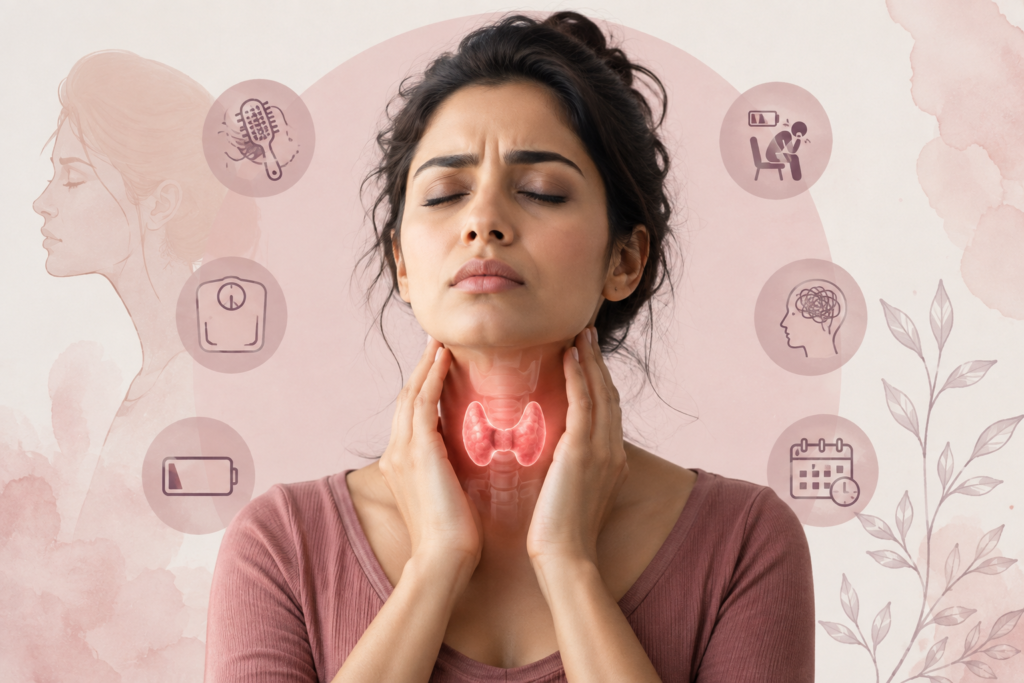
Population studies estimate that thyroid disorders affect a striking share of Indian adults — and women are far more likely to develop one than men. Research from the Indian Journal of Endocrinology and Metabolism puts the number of affected Indians in the tens of millions, with hypothyroidism alone showing up in roughly 1 in 10 adults screened, and rates consistently higher among women.
Yet most cases go undiagnosed for years. The symptoms are easy to miss because they mimic everyday tiredness, stress, or “just getting older.”
Catching them early makes a real difference — thyroid disorders are highly treatable once identified. Here’s what to actually watch for.
What Does the Thyroid Gland Actually Do?
The thyroid is a small, butterfly-shaped gland at the base of your neck. Think of it as your body’s metabolic control centre.
It produces hormones that regulate your energy levels, body temperature, weight, heart rate, and mood. When it produces too little or too much of these hormones, nearly every system in your body feels the ripple effect.


Hypothyroidism vs Hyperthyroidism — Know the Difference
Hypothyroidism (underactive thyroid) means your gland isn’t producing enough hormone. You’ll typically feel sluggish, gain weight, and feel cold often. This is the more common condition among Indian women.
Hyperthyroidism (overactive thyroid) is the opposite — too much hormone. It tends to cause anxiety, a racing heart, unexplained weight loss, and feeling overheated.
Both conditions share one thing in common: they’re frequently mistaken for something else entirely, which is why they go unnoticed.
10 Thyroid Symptoms in Women to Watch For
1. Unexplained Weight Gain or Loss
Sudden weight changes without any shift in diet or exercise are one of the clearest thyroid red flags. Hypothyroidism slows your metabolism and often leads to gradual weight gain, while hyperthyroidism can cause the opposite.
2. Persistent Fatigue Even After Sleep
Feeling drained despite a full night’s sleep — not just occasionally, but most days — is a classic hypothyroid symptom. It’s different from ordinary tiredness; it doesn’t improve with rest.
3. Hair Thinning and Excessive Hair Fall
Thyroid hormones directly influence your hair growth cycle. Sudden, diffuse hair thinning (not patchy bald spots) across the scalp is a common early sign, especially in hypothyroidism.
4. Menstrual Irregularities or Heavier Periods
Thyroid hormones and reproductive hormones are closely linked. Heavier, lighter, or irregular periods — or cycles that suddenly become unpredictable — often point back to the thyroid before anything else is checked.
5. Dry Skin, Puffy Face, or Brittle Nails
Hypothyroidism commonly shows up on the skin first: dryness that doesn’t respond to moisturiser, mild puffiness around the eyes and face, and nails that chip or break easily.
6. Feeling Cold All the Time
If you’re reaching for a sweater while everyone else is comfortable, and this has become a pattern rather than a one-off, it’s worth paying attention to. An underactive thyroid slows your body’s heat production.
7. Mood Changes — Anxiety, Low Mood, or Irritability
Thyroid imbalances affect brain chemistry, not just the body. Hyperthyroidism often brings anxiety and restlessness, while hypothyroidism is linked to low mood, irritability, and a general sense of mental heaviness.
8. Brain Fog or Difficulty Concentrating
Struggling to focus, forgetting simple things, or feeling mentally “slow” is a frequently overlooked thyroid symptom — often dismissed as stress or lack of sleep.
9. Constipation or Digestive Sluggishness
An underactive thyroid slows digestion along with everything else. Persistent constipation that’s new or worsening, without a clear dietary cause, is worth flagging to a doctor.
10. Swelling in the Neck (Goiter)
Visible swelling at the base of the neck, or a feeling of tightness when swallowing or wearing a necklace, can indicate an enlarged thyroid gland. This symptom alone is reason enough to get checked promptly.
Why are Indian Women at Higher Risk?
A few factors converge here. Iodine deficiency remains a concern in certain regions of India, and iodine is essential for normal thyroid function.
There’s also a genetic predisposition to autoimmune thyroid conditions in South Asian populations, along with hormonal shifts after pregnancy — a condition called postpartum thyroiditis — that can trigger thyroid dysfunction in new mothers.
Add chronic stress and inconsistent routine screening to the mix, and it’s easy to see why so many cases slip through unnoticed for years.
What Tests Diagnose a Thyroid Disorder?
A TSH (Thyroid Stimulating Hormone) test is the standard first screen — it’s simple, inexpensive, and widely available at diagnostic labs across India, typically costing between ₹200–₹500.
If results are abnormal, your doctor may order T3 and T4 tests to measure actual hormone levels, and an Anti-TPO antibody test to check for autoimmune thyroid conditions like Hashimoto’s thyroiditis.
If you haven’t been screened before and you’re experiencing several symptoms above, find a doctor near you — an endocrinologist or general physician can order the right panel of tests.
When Should You See a Doctor?
A single symptom on this list isn’t necessarily cause for alarm — but a combination is worth acting on. See a doctor if:
- You have three or more symptoms from the list above
- You have a family history of thyroid disease
- You’re pregnant or planning to conceive
Thyroid disorders are manageable, often with a simple daily medication, once properly diagnosed. The hardest part is usually just getting tested.
FAQs
1. Can thyroid problems cause weight gain in Indian women?
Yes. Hypothyroidism, the more common thyroid condition among Indian women, slows metabolism and frequently leads to gradual, unexplained weight gain.
2. What is the difference between hypothyroidism and hyperthyroidism?
Hypothyroidism means an underactive thyroid producing too little hormone, causing fatigue and weight gain. Hyperthyroidism means an overactive thyroid producing too much hormone, causing anxiety and weight loss.
3. Which thyroid test should I get first?
A TSH (Thyroid Stimulating Hormone) blood test is the standard first-line screening test and is widely available at labs across India.
4. Is thyroid disease genetic?
There is a genetic component, particularly for autoimmune thyroid conditions. A family history of thyroid disease increases your risk and is a good reason to get screened.
5. Can thyroid problems affect fertility in Indian women?
Yes. Untreated thyroid disorders can affect ovulation and menstrual regularity, which is why doctors often recommend thyroid testing for women who are having difficulty conceiving. If you’re navigating cycle irregularities alongside these symptoms, you may also find our guide on irregular periods helpful.

Dr. Dheeraj Yadav
Ayurvedic Physician & Certified Bach Flower Remedy Practitioner
Dr. Dheeraj Yadav is a licensed Ayurvedic doctor and certified Bach Flower Remedy practitioner with deep expertise in holistic and natural healing. He carefully reviews all health-related content on this website to ensure it is accurate, safe, and consistent with the principles of traditional and integrative medicine.
This article is for informational purposes only and does not constitute medical advice. Please consult a qualified healthcare professional before making any health decisions.