

Dengue vs Viral Fever in Delhi — How to Tell the Difference This Monsoon (2026)
Kanica Sharma
July 4, 2026
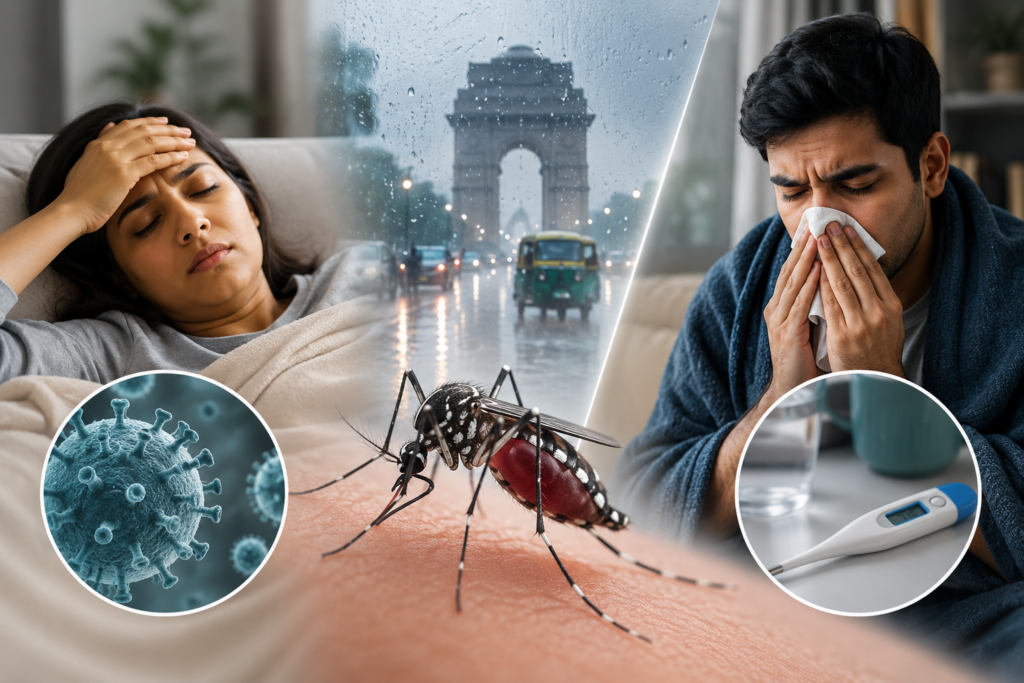
Delhi has already logged 347 dengue cases, 124 malaria cases, and 19 chikungunya cases this year — the highest malaria count in a decade — and July is being observed as Anti-Dengue Month, with the government scaling up awareness campaigns across the city. If you’ve woken up with a fever this monsoon, the question on your mind is probably: *is this just a viral, or is it dengue?*
The two can look identical for the first 24–48 hours. Here’s how doctors actually tell them apart, and when a fever stops being something you wait out.
Dengue vs Viral Fever: Quick Comparison
| Dengue | Viral Fever |
Onset | Sudden, high (often 104°F/40°C) | Gradual, low-to-moderate |
Duration | 5–7 days | 3–5 days |
Body pain | Severe joint/muscle pain (“breakbone fever”) | Mild, generalised ache |
Rash | Appears day 2–5, starts on chest/limbs | Rare, mild if present |
Cold symptoms | Usually absent | Runny nose, cough, sore throat common |
Platelet count | Often drops sharply | Usually normal |
Recovery pattern | Fever drop can mean the dangerous phase | Fever drop means recovery |
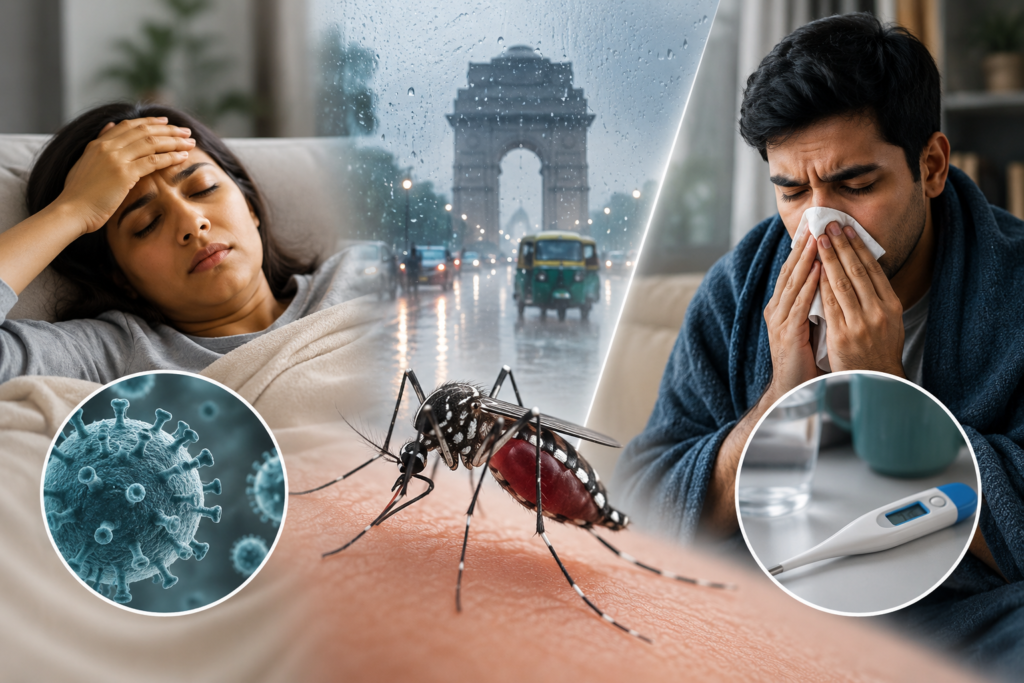

Dengue Symptoms Day by Day
Dengue symptoms typically show up 4–10 days after a mosquito bite:
- Days 1–2: Sudden high fever, headache (often behind the eyes), severe joint and muscle pain, nausea.
- Days 2–5: A rash may appear, starting on the chest and spreading outward.
- Days 3–7 (critical phase): Platelet count starts falling, usually bottoming out around day 5–6. This is when warning signs, if any, tend to appear.
- Days 7–10: Platelets begin recovering within 3–4 days of the fever breaking, typically normalising within a week to ten days.
The dangerous myth: many people assume that once the fever drops, they’re recovering. In dengue, days 5–7 — right as the fever breaks — is often when the risk of complications is highest. Don’t treat a dropping fever as the all-clear on its own.
Dengue Platelet Count: Normal Range and When It’s a Concern
A healthy platelet count sits between 150,000–450,000/µL.
- 100,000–150,000/µL — mild drop, common in early dengue, usually just needs monitoring.
- 20,000–100,000/µL — moderate drop, where most dengue patients land; your doctor will want repeat tests.
- Below 20,000/µL — severe, requires close medical supervision.
A platelet count alone doesn’t confirm dengue — a normal count with high fever is more consistent with a viral infection, while a rapid drop alongside high fever points toward dengue and warrants an NS1 or dengue antibody test.
A platelet count alone doesn’t confirm dengue — a normal count with high fever is more consistent with a viral infection, while a rapid drop alongside high fever points toward dengue and warrants an NS1 or dengue antibody test.
Warning Signs You Should Never Ignore
Contact a doctor immediately — don’t wait it out — if you or a family member develops:
- Severe abdominal pain or persistent vomiting
- Bleeding from the gums or nose, or blood in vomit/stool/urine
- Rapid or difficult breathing
- Extreme restlessness, confusion, or difficulty waking up
- Cold, clammy skin or sudden weakness after the fever drops
These can signal a progression to severe dengue (dengue haemorrhagic fever or dengue shock syndrome), which needs hospital-level care.
These can signal a progression to severe dengue (dengue haemorrhagic fever or dengue shock syndrome), which needs hospital-level care.
When to See a Doctor in Delhi
Given how quickly dengue can turn, don’t self-diagnose off symptoms alone if you live in or have recently been in Delhi during monsoon season:
- High fever lasting more than 2 days, especially with pain behind the eyes or severe body ache — get a dengue NS1 test.
- Any of the warning signs above, at any point — go to a hospital the same day, not the next morning.
- Fever in a child, elderly person, or pregnant woman — see a doctor sooner rather than later; these groups are at higher risk of complications.
- Mild fever with cold/cough symptoms and no rash — more likely viral, but still worth a check if it lasts beyond 4–5 days.
You can find a general physician or internal medicine specialist near you through our doctor directory.
Frequently Asked Questions (FAQs)
1. Is my fever dengue or viral?
The biggest tells are speed of onset (dengue hits suddenly and high), pain location (dengue causes pain behind the eyes and in joints, viral fever tends toward cold/cough symptoms), and whether a rash or falling platelet count shows up — both point to dengue.
2. How many days does dengue fever last?
Most dengue fevers last 5–7 days, with a critical phase around days 3–7 where platelet counts drop and complications, if they happen, tend to show up.
3. Can dengue happen without a rash?
Yes. Not everyone with dengue develops a rash — don’t rule out dengue just because there’s no rash, especially with high fever and joint pain.
4. What is a normal platelet count during dengue?
Normal is 150,000–450,000/µL. In dengue, counts commonly fall into the 20,000–100,000/µL range during the critical phase before recovering.
5. When should I go to the hospital for dengue instead of a clinic?
Go straight to a hospital if you notice bleeding, persistent vomiting, severe abdominal pain, breathing difficulty, or confusion — these need emergency-level monitoring, not an outpatient visit.

Dr. Dheeraj Yadav
Ayurvedic Physician & Certified Bach Flower Remedy Practitioner
Dr. Dheeraj Yadav is a licensed Ayurvedic doctor and certified Bach Flower Remedy practitioner with deep expertise in holistic and natural healing. He carefully reviews all health-related content on this website to ensure it is accurate, safe, and consistent with the principles of traditional and integrative medicine.
This article is for informational purposes only and does not constitute medical advice. Please consult a qualified healthcare professional before making any health decisions.