

Sudden Blurry Vision in One Eye — When Is It an Emergency? An Eye Doctor Explains
Kanica Sharma
June 24, 2026
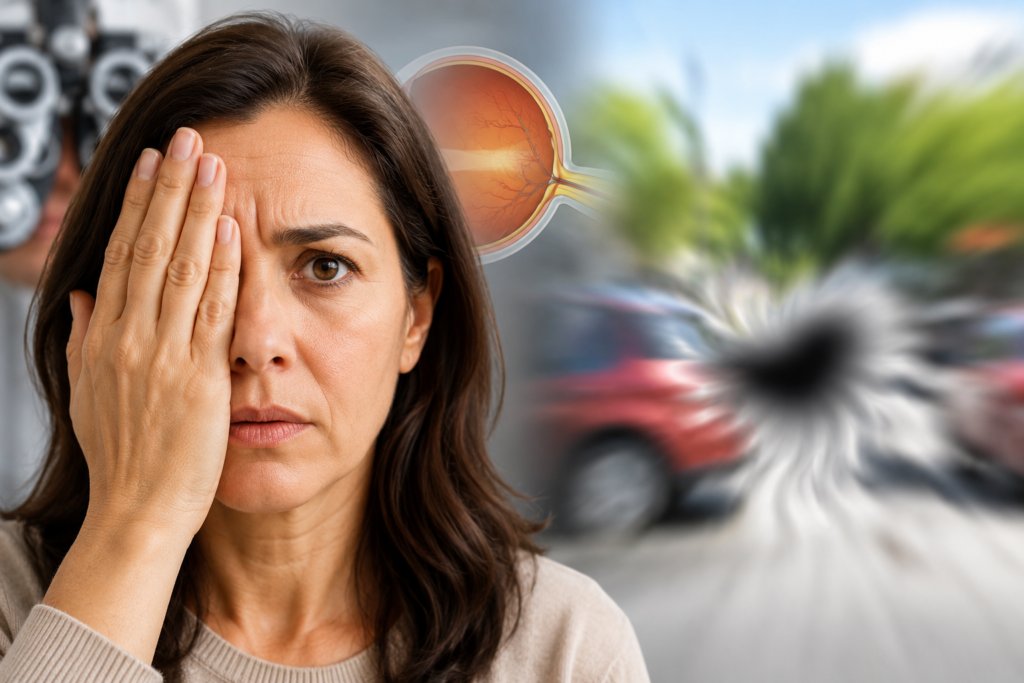
Waking up or suddenly noticing that your vision in one eye has become blurry, foggy, or distorted is an unsettling experience. For some people, this is a temporary and harmless change. For others, it is one of the earliest warning signs of a serious condition — including a stroke or retinal emergency — that requires immediate medical attention.
The most important thing to understand is this: sudden changes in vision in one eye should never be ignored and should always be evaluated by a doctor. The speed at which you get help can directly affect the outcome.
What Sudden Blurry Vision in One Eye Can Mean
1. Retinal Artery Occlusion — A Medical Emergency
A retinal artery occlusion is a blockage of the blood supply to the retina — the light-sensitive layer at the back of the eye. It typically causes sudden, painless loss of vision in one eye. It is sometimes called an ‘eye stroke’ because it is caused by the same mechanisms as a brain stroke — a blood clot or plaque blocking a blood vessel.
This is a true medical emergency. The retina can begin to suffer irreversible damage within minutes to hours if blood flow is not restored. If you experience sudden painless vision loss in one eye, go to a hospital emergency department immediately.
2. Retinal Detachment
The retina can detach from the back of the eye, causing vision to become blurry, distorted, or partially blocked — often described as a curtain or shadow appearing across part of the vision. Before a detachment, many patients notice a sudden increase in floaters (dark spots or cobwebs in vision) or flashes of light in the peripheral vision.
Retinal detachment is a surgical emergency. If treated promptly — ideally within 24 hours for detachments involving the central vision — outcomes are generally very good. Delays significantly worsen results.
3. Transient Ischaemic Attack (TIA) or Stroke
A transient ischaemic attack (TIA), sometimes called a mini-stroke, can cause sudden blurry or lost vision in one eye that resolves within minutes to an hour. Even if the vision returns completely to normal, a TIA is a serious warning sign that a full stroke may follow. Go to a hospital immediately — do not wait to see if it was a one-off event.
A stroke affecting the visual cortex or optic pathway can also cause persistent vision changes in one eye or one side of the visual field.


4. Acute Angle-Closure Glaucoma
This is a sudden rise in pressure inside the eye that requires emergency treatment. It typically causes sudden blurry vision, severe eye pain, headache, nausea, and seeing coloured halos around lights. It is more common in people who are far-sighted (hyperopic) and in older adults.
Without prompt treatment — usually within hours — acute glaucoma can cause permanent vision loss.
5. Ocular Migraine
Ocular migraines cause temporary visual disturbances — zigzag patterns, flashing lights, or temporary blind spots — typically in one eye, lasting 20 to 30 minutes. They may or may not be followed by a headache. While frightening, they are generally harmless and resolve on their own.
However, ocular migraines should be diagnosed by a doctor to rule out more serious causes. They should not be self-diagnosed without a proper eye examination.
6. Diabetic Retinopathy
In people with diabetes, high blood sugar levels can damage the small blood vessels in the retina over time. When these vessels bleed or leak, it can cause blurry vision that typically develops gradually rather than suddenly. However, a sudden bleed into the vitreous (the gel inside the eye) can cause a rapid, dramatic change in vision.
Diabetic retinopathy is one of the leading causes of blindness in India. Regular eye check-ups are essential for anyone with diabetes.
Go to Emergency Immediately If You Have
- Sudden painless loss of vision in one eye — even if it lasts only a few minutes
- A curtain or shadow appearing across part of your vision
- A sudden dramatic increase in floaters (dark spots) along with flashes of light
- Blurry vision combined with severe eye pain, headache, and nausea
- Vision changes along with weakness or numbness in the face, arm, or leg
- Vision changes along with difficulty speaking or confusion
These are all signs of conditions that worsen rapidly with time. Minutes matter. Do not drive yourself — call a family member or take an auto/taxi to the nearest hospital emergency.
When to See an Eye Doctor (Urgent But Not Emergency)
- Vision in one eye has become noticeably blurrier over the past few days without other symptoms
- You are diabetic and notice any change in vision — even gradual
- You have had a TIA (mini-stroke) in the past and notice any visual change
- You wear glasses or contact lenses and your vision seems significantly worse than your prescription
- You see double vision intermittently in one or both eyes
Which Doctor Should You See?
For sudden or significant changes in vision, your first stop should be an Ophthalmologist (eye specialist). They have the equipment to examine the retina, measure eye pressure, and assess the optic nerve — the structures involved in most causes of sudden vision change.
If your vision change was accompanied by neurological symptoms — facial weakness, speech difficulties, arm or leg weakness — go directly to a hospital emergency department, as a stroke evaluation is needed urgently.
In India, major hospitals with ophthalmology departments include AIIMS, Sankara Eye Centre, Dr. Shroff’s Charity Eye Hospital, and the eye departments at Apollo, Max, and Fortis hospitals.
To find an ophthalmologist near you: Find a Doctor
FAQs
Q: My vision went blurry for a few minutes and then returned to normal. Do I still need to see a doctor?
A: Yes — absolutely. Transient vision loss that resolves is not reassuring; it may indicate a TIA (mini-stroke) or a retinal problem. The fact that it returned to normal does not mean the underlying cause is gone. See a doctor the same day.
Q: I have been diabetic for 10 years. How often should I have my eyes checked?
A: People with diabetes should have a dilated eye examination at least once a year, even if they have no vision symptoms. Diabetic retinopathy in its early stages causes no symptoms — by the time vision is affected, significant damage has already occurred. Annual screening is the standard recommendation.
Q: Can blurry vision in one eye be caused by tiredness or screen time?
A: Eye strain from screens typically causes temporary blurry vision in both eyes, along with headache and eye fatigue. It almost never causes blurry vision in only one eye. If the blurriness is genuinely in just one eye — cover each eye alternately to confirm — see an eye doctor rather than assuming it is screen-related.
This article is for informational purposes only and does not replace professional medical advice. Sudden changes in vision are a medical concern — always consult a qualified ophthalmologist.
Looking for an eye specialist? Find a Doctor on BestDoctorsInTheCity.com — verified ophthalmologists across Delhi, Mumbai, Bangalore and more.

Dr. Dheeraj Yadav
Ayurvedic Physician & Certified Bach Flower Remedy Practitioner
Dr. Dheeraj Yadav is a licensed Ayurvedic doctor and certified Bach Flower Remedy practitioner with deep expertise in holistic and natural healing. He carefully reviews all health-related content on this website to ensure it is accurate, safe, and consistent with the principles of traditional and integrative medicine.
This article is for informational purposes only and does not constitute medical advice. Please consult a qualified healthcare professional before making any health decisions.