

Knee Pain When Climbing Stairs — Arthritis or Injury? When to See a Doctor in India
Kanica Sharma
June 14, 2026
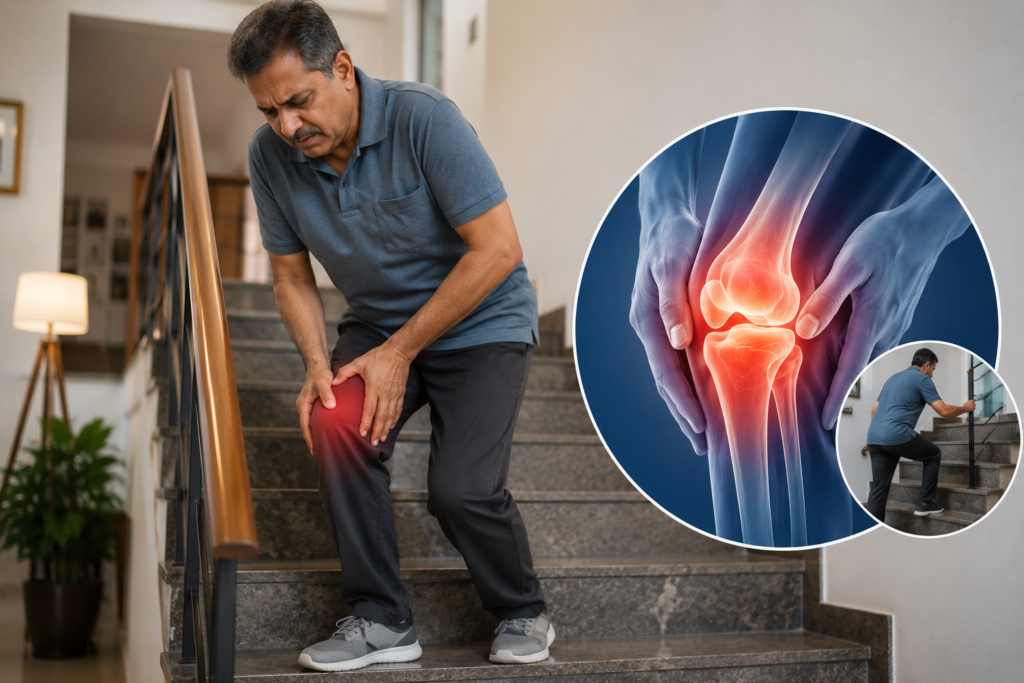
Knee pain that gets worse when you climb stairs is one of the most common complaints that brings patients to orthopaedic clinics across India. It is so common, in fact, that many people assume it is simply a part of getting older and ignore it for months or even years.
It is not something you have to live with. And in many cases, treating it early prevents it from becoming a much bigger problem later.
This guide explains the four most likely causes of knee pain on stairs, which warning signs you should not ignore, and what kind of doctor you need to see.
Why Stairs Specifically?
Walking on flat ground puts roughly 1.5 times your body weight through each knee. Climbing stairs increases that to 3 to 4 times your body weight. This is why the knee feels fine on flat surfaces but becomes painful the moment you go up or down steps — the force is simply much greater.
This extra load amplifies whatever underlying problem already exists in the knee, making stairs a reliable early warning sign of a knee condition that may not yet be obvious during normal walking.
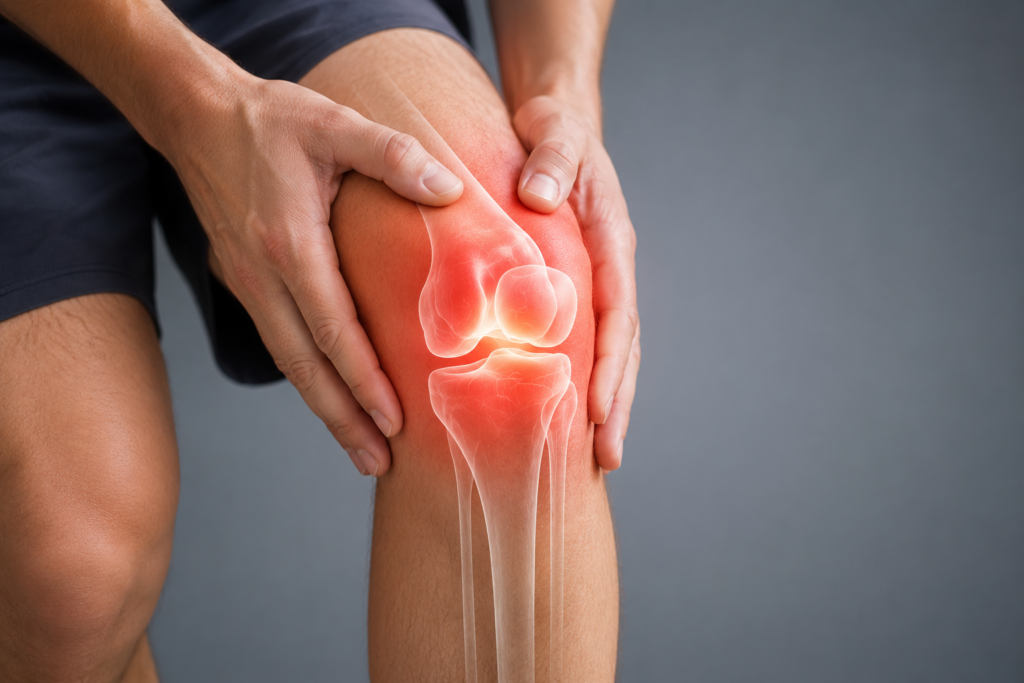
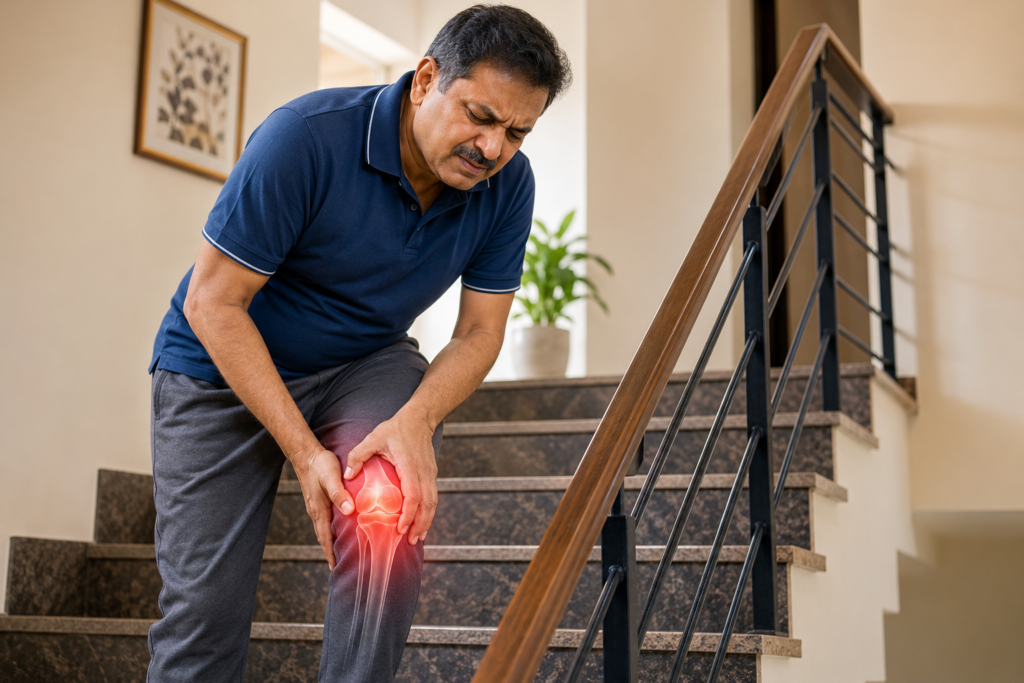
4 Most Common Causes of Knee Pain on Stairs in India
1. Patellofemoral Pain Syndrome (Runner’s Knee)
This is one of the most frequent causes of stair-related knee pain, especially in younger and middle-aged adults. The kneecap (patella) sits in a groove at the front of the knee joint. When it tracks slightly off-centre — due to muscle imbalance, overuse, or poor alignment — it creates friction and pain, particularly when the knee is bent under load, as it is on stairs.
The pain is usually felt at the front of the knee or around the kneecap. It often gets worse after sitting for long periods and then standing up, or after going down stairs (more than going up).
2. Osteoarthritis
Osteoarthritis is the gradual breakdown of cartilage — the smooth tissue that cushions the ends of the bones in the knee joint. In India, knee osteoarthritis is extremely prevalent, particularly in women over 45 and in people who have spent years doing physically demanding work.
As cartilage wears away, the bones begin to rub against each other, causing pain, stiffness, and swelling. Stairs are often one of the first activities that become difficult because of the increased load they place on the joint.
Osteoarthritis pain typically starts as a dull ache after activity, gradually becoming more constant. Morning stiffness that lasts less than 30 minutes is a characteristic sign.
3. Meniscus Tear
The menisci are two C-shaped pieces of cartilage in the knee that act as shock absorbers. They can tear through injury — a sudden twist or fall — or gradually through wear and tear over time (degenerative meniscus tear, common in people over 40).
A meniscus tear often causes pain on one specific side of the knee (inner or outer), clicking or catching sensations, and difficulty fully straightening or bending the knee. Stairs can trigger sharp pain if the torn portion is being pinched during movement.
4. Chondromalacia Patellae
This is a softening and deterioration of the cartilage on the underside of the kneecap. It is closely related to patellofemoral syndrome and common in young adults, particularly women. The pain is typically located at the front of the knee and is worsened by stairs, squatting, and prolonged sitting.
Red Flag Signs — See a Doctor This Week If You Have Any of These
Do not wait and monitor the situation if you experience:
- Knee that is visibly swollen, warm to the touch, or appears deformed
- Sudden, severe pain after a fall, twist, or direct impact — even if it settles
- Knee that locks up or gives way unexpectedly while walking
- Pain that wakes you from sleep
- Knee pain accompanied by fever (can indicate joint infection)
- You cannot put full weight on the knee at all
- Pain that has been worsening progressively over 4 to 6 weeks without improvement
When to See a Doctor (Non-Emergency)
Even without red flag symptoms, you should book an appointment with a doctor if:
- Knee pain on stairs has been present for more than 3 to 4 weeks
- The pain is limiting your daily activities — avoiding stairs, reducing walking distance
- You are over 45 with stiffness and swelling in addition to pain
- You have had a previous knee injury that never fully healed
- You are managing the pain with painkillers on most days
Which Doctor Should You See?
For knee pain in India, start with an Orthopaedic Surgeon (also called an orthopaedic doctor or bone and joint specialist). They will examine your knee, check your range of motion, and order an X-ray or MRI if needed to determine the exact cause.
You do not need to see a general physician first — you can book directly with an orthopaedic specialist.
What to bring to your first appointment:
- Any previous X-ray or MRI reports of the knee
- A list of medications you currently take
- Notes on when the pain started, what makes it worse, and what helps
Most knee conditions diagnosed early — including early osteoarthritis, meniscus tears, and patellofemoral syndrome — can be managed effectively with physiotherapy, medication, or minimally invasive procedures. Surgery is rarely the first recommendation.
Can Knee Pain on Stairs Be Prevented?
If you have been diagnosed with early-stage knee osteoarthritis or patellofemoral syndrome, the following can slow progression significantly:
- Strengthen the quadriceps — the muscles at the front of the thigh take load off the knee joint. Even simple exercises like straight leg raises help
- Maintain a healthy weight — every kilogram of excess weight adds roughly 3 to 4 kg of force on the knee when climbing stairs
- Avoid sitting cross-legged or deep squatting for extended periods
- Use a handrail on stairs when pain is present — this reduces load through the knee
- Wear proper footwear with cushioning — thin-soled footwear offers no shock absorption
FAQs
Q: Is knee pain on stairs always a sign of arthritis?
A: No. Arthritis is one possible cause, but stair-related knee pain in younger adults is more commonly caused by patellofemoral syndrome or a meniscus issue. A proper examination and imaging is needed to identify the exact cause — do not assume arthritis without a diagnosis.
Q: How urgent is this — can I wait a month before booking?
A: If you have any of the red flag symptoms listed above, see a doctor within the week. If the pain is mild and only on stairs, waiting 2 to 3 weeks is usually acceptable. If it has already been present for more than a month, book now — the longer knee conditions go undiagnosed, the harder they can be to treat conservatively.
Q: Will I need surgery?
A: Most knee conditions that cause stair pain are managed without surgery, especially when caught early. Physiotherapy, anti-inflammatory medication, and lifestyle changes resolve a large percentage of cases. Your orthopaedic doctor will discuss all options with you after diagnosis.
This article is for informational purposes only and does not constitute medical advice. Always consult a qualified healthcare professional for diagnosis and treatment.
Looking for a specialist? Find a Doctor on BestDoctorsInTheCity.com — verified orthopaedic surgeons across Delhi, Mumbai, Bangalore and more.

Dr. Dheeraj Yadav
Ayurvedic Physician & Certified Bach Flower Remedy Practitioner
Dr. Dheeraj Yadav is a licensed Ayurvedic doctor and certified Bach Flower Remedy practitioner with deep expertise in holistic and natural healing. He carefully reviews all health-related content on this website to ensure it is accurate, safe, and consistent with the principles of traditional and integrative medicine.
This article is for informational purposes only and does not constitute medical advice. Please consult a qualified healthcare professional before making any health decisions.